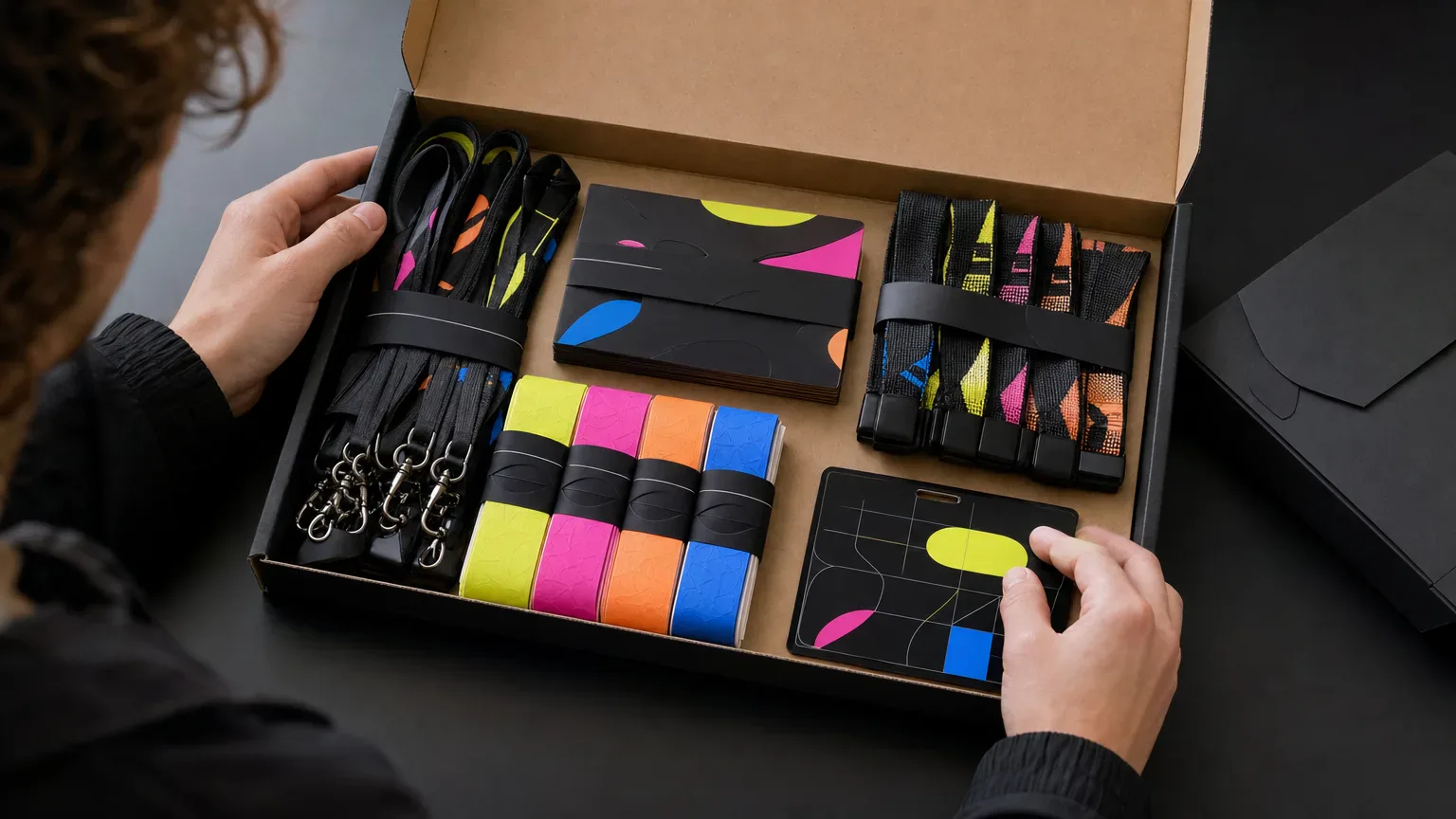
Order enough wristbands to cover every person who should receive that specific access item, plus a controlled allowance for uncertainty, replacements and operational use. Do not apply one generic percentage to every category. Calculate guest bands, day tickets, VIP, staff and credentials separately because each group has different certainty and security consequences.
Begin with categories, not one attendance number
A headline attendance figure hides the details that affect production. Weekend guests may receive fabric bands, single-day guests date-specific Tyvek, and crew role-labelled passes. Start with confirmed or expected quantities for each category. If permissions differ, keep the quantities separate even when the people overlap.
Also identify whether a person receives more than one item. A crew member might need a pass and a wristband for an evening guest area. A weekend guest should not be counted again for every event day if one fabric band remains valid.
Use an allowance that reflects uncertainty
The free Event Access Kit uses a simple planning formula: (attendees + operational users) × (1 + allowance), rounded up. That is a starting point—not an ordering rule. A pre-registered conference may have low uncertainty. A public event with door sales, multiple gates and volunteer issue may need a different allowance.
| Category | Quantity basis | Planning question |
|---|---|---|
| Pre-registered guests | Confirmed registrations plus justified allowance | How stable is the list before production? |
| Door sales | Capacity and realistic sales plan | Can additional entry be sold after stock runs out? |
| VIP / access upgrades | Allocated inventory plus upgrade policy | Who can authorise a change? |
| Staff, crew and vendors | Roster by role and shift | Do they need wristbands or passes? |
| Replacements | Controlled risk allowance | Who holds and records replacement stock? |
Control spares instead of distributing them
Spare wristbands protect the event from shortages only when they remain controlled. Assign them to a named accreditation or operations lead. Record damaged, misapplied or replacement bands. Keep different dates and categories physically separated, and reconcile unused quantities after the event.
Round by product, not by total
Suppliers may have quantity tiers or minimum production requirements. Ask for the relevant options after your access map is stable. Do not move quantities between categories simply to reach a round number if that creates unclear permissions. It may be better to simplify the access system itself.
Quantity worksheet
- List every guest and operational category.
- Choose the item each category receives.
- Enter confirmed or expected people by category.
- Add a justified allowance separately.
- Account for staff and accreditation use.
- Assign controlled replacement stock.
- Confirm supplier quantity requirements.
- Pack and label by gate, day and category.
Example calculation
Illustrative only: an event expects 500 guests and 50 operational users. A 5% planning allowance produces 578 total items when rounded up—but this does not mean 578 identical wristbands. The organiser should split the plan into guest bands, staff items and role credentials before ordering.
Frequently asked questions
What percentage of spares should I order?
There is no universal percentage. Base the allowance on attendance certainty, replacement risk, gate operations and supplier constraints.
Should staff be included in the guest quantity?
Count staff separately and decide whether they need wristbands, passes or both. Roles and zones often need more readable credentials.
Should I order to venue capacity or expected attendance?
Use the commercial and safety plan for the event. If door sales remain possible up to capacity, the inventory plan must account for that. If access is pre-registered, confirmed demand may be the better starting point.